Petrol Price in Pakistan Increased – Latest Petrol Price Update 2026
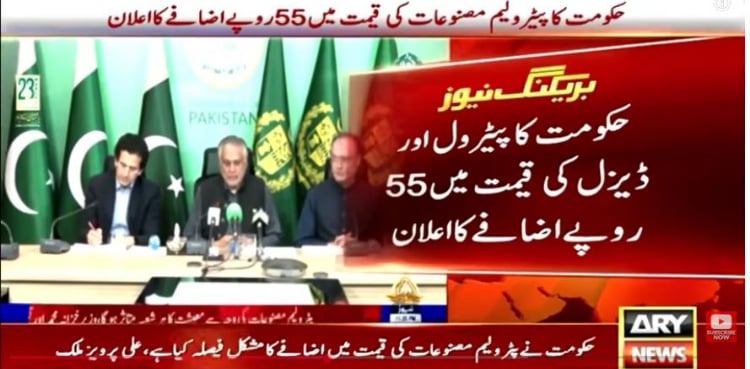
Pakistan government has announced a major increase in petrol and diesel prices. The decision was taken after a global rise in oil prices and tensions in the Middle East. The announcement was made during a press conference in Islamabad by Petroleum Minister Ali Pervaiz Malik along with Deputy Prime Minister Ishaq Dar and Finance Minister Muhammad Aurangzeb.
Latest Petrol Price in Pakistan
Petrol Price: Rs 321.17 per litre
High Speed Diesel Price: Rs 335.86 per litre
The government increased both petrol and diesel prices by Rs55 per litre. Previously petrol was being sold at around Rs266.17 per litre, but the new price has now reached Rs321.17 per litre.
According to officials, the new prices came into effect from 12:00 AM on Saturday across Pakistan. This increase was made due to the rise in global petroleum prices and the ongoing crisis in the Middle East.
Why Petrol Prices Increased
Deputy Prime Minister Ishaq Dar explained that international oil prices have increased because of the conflict between Iran, the United States, and Israel. These geopolitical tensions have affected global oil supply and caused petroleum prices to rise worldwide.
He said that many countries automatically increase fuel prices when international markets go up. However, the Pakistani government held several meetings and discussions before deciding on the price increase.
Prime Minister Shehbaz Sharif also reviewed the situation for several weeks before approving the new prices. The government tried to pass the minimum possible impact to the public while maintaining fuel supply in the country.
Government Meetings on Petroleum Prices
A special committee was formed to review the global oil situation. The committee included Deputy Prime Minister Ishaq Dar, Petroleum Minister Ali Pervaiz Malik, and Finance Minister Muhammad Aurangzeb.
The committee met with different stakeholders and reviewed the international energy market. Their goal was to protect Pakistan’s economy while ensuring that fuel supply continues without disruption.
Officials said the government will continue to monitor global oil prices and may revise petroleum prices on a weekly basis if necessary.
Impact of Middle East Crisis
The crisis in the Middle East has created uncertainty in global energy markets. Oil prices have increased sharply due to fears of supply disruptions in the region.
The Strait of Hormuz, which is one of the most important oil shipping routes in the world, has become a major concern during the conflict. If shipping in this area is disrupted, global oil supply could decrease, which may push prices even higher.
Because Pakistan imports most of its petroleum products, global price changes directly affect local fuel prices.
Pakistan’s Energy Supply Plan
The government has started working on alternative energy supply routes to ensure that the country does not face fuel shortages.
Two ships from Pakistan National Shipping Corporation (PNSC) have been sent to ports in Saudi Arabia and the UAE to bring crude oil supplies. Officials also confirmed that Saudi Aramco has assured Pakistan of continued oil supply if large vessels are arranged.
These steps are being taken to ensure that Pakistan’s refineries continue to receive crude oil and the country does not face an energy crisis.
Economic Impact of Rising Fuel Prices
Petrol price increases usually affect the entire economy. Transportation costs increase, which leads to higher prices for food, goods, and services.
Economists say that rising fuel prices can also increase inflation and put pressure on household budgets. However, government officials say that Pakistan’s economy is currently stable enough to handle the situation.
Finance Minister Muhammad Aurangzeb explained that the government is closely monitoring the situation and making decisions carefully to protect economic stability.
Future Petrol Price Reviews
Officials have announced that petroleum prices may now be reviewed more frequently depending on international market conditions.
If global oil prices decrease, the government may also reduce petrol and diesel prices in the future.
The petroleum minister assured the public that once the international situation stabilizes, fuel prices will be revised downward quickly.
Conclusion
The latest petrol price in Pakistan has reached Rs321.17 per litre while diesel now costs Rs335.86 per litre. The increase of Rs55 per litre was announced due to rising global oil prices and the ongoing Middle East crisis.
Although the decision may increase financial pressure on the public, the government says it was necessary to maintain fuel supply and prevent shortages in the country.












No comments:
Post a Comment