Tuesday, 26 May 2026

Life Insurance After 50 in USA 2026 – Best Options, Costs & What to Avoid


Life Insurance After 50 in USA 2026 – Best Options, Costs & What to Avoid

Published: May 2026 | Category: Life Insurance | Reading Time: 9 min
Life Insurance After 50 USA 2026

Getting life insurance after 50 is completely possible — but choosing the right policy matters more than ever.

Many Americans in their 50s, 60s, and even 70s believe life insurance is either too expensive or impossible to get. In reality, millions of people successfully purchase coverage later in life every year. The key is understanding which type of insurance fits your age, budget, health condition, and long-term financial goals.

In 2026, the life insurance market in the USA has become more flexible than ever. Many insurers now offer no-medical-exam policies, simplified approval processes, and customized plans specifically designed for older adults. However, there are also expensive policies, hidden fees, and misleading offers that can cost you thousands if you choose incorrectly.

This complete guide explains everything you need to know about life insurance after 50 in the United States — including the best policy types, average costs, health requirements, top insurance companies, and the biggest mistakes to avoid.


Why People Buy Life Insurance After 50

The reasons for buying life insurance change significantly after age 50. Younger people often buy coverage mainly for income replacement, but older adults usually have more focused financial goals.

  • Protecting a spouse financially — Many married couples still rely on one primary income, retirement benefit, or Social Security payment. Life insurance can protect the surviving spouse from financial hardship.
  • Paying off debt — Mortgages, personal loans, car payments, and even co-signed student loans can become a burden on surviving family members.
  • Covering funeral expenses — Funeral and burial costs in the USA now commonly range from $9,000 to $15,000 in 2026.
  • Replacing employer coverage — Many people lose employer-provided life insurance after retirement or job changes.
  • Leaving an inheritance — Some people use permanent life insurance to leave money to children or grandchildren tax-efficiently.
  • Business protection — Small business owners often use life insurance to protect business partners or fund buy-sell agreements.

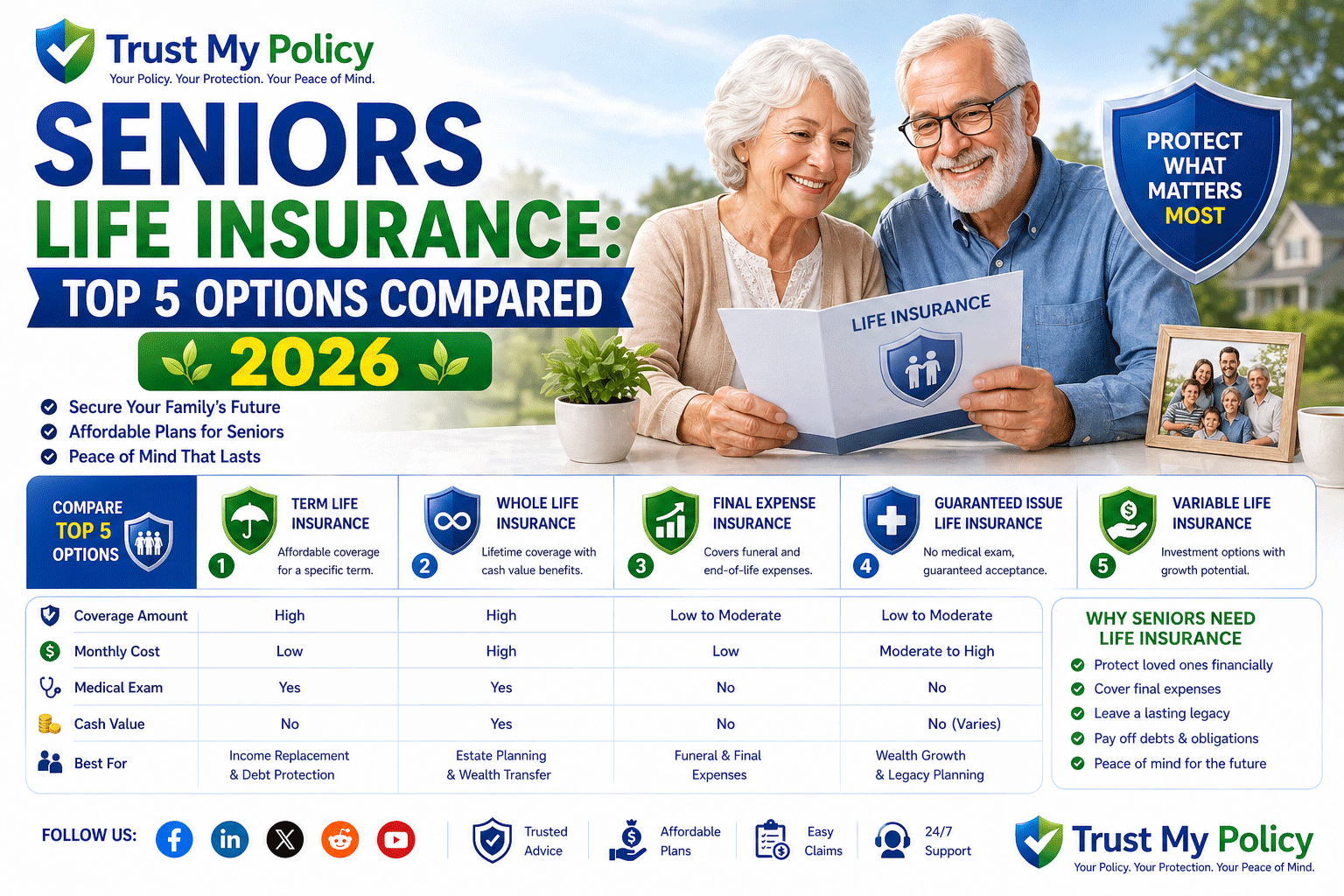
Types of Life Insurance Available After 50

Life Insurance Types After 50 USA

1. Term Life Insurance

Term life insurance is the most affordable option for many people over 50. It provides coverage for a specific number of years — usually 10, 15, 20, or 30 years.

If you die during the policy term, your beneficiaries receive the death benefit tax-free. If the term expires while you are still alive, coverage ends unless you renew or convert the policy.

Term life works best for temporary financial responsibilities such as paying off a mortgage or protecting a spouse during retirement years.

Best for: Affordable large coverage amounts for a limited time.

2. Whole Life Insurance

Whole life insurance provides permanent coverage for your entire life as long as premiums are paid. These policies also build cash value over time.

Unlike term insurance, whole life never expires. However, premiums are much higher. Some policies also pay dividends depending on the insurance company.

Best for: Lifelong protection and estate planning.

3. Universal Life Insurance

Universal life insurance offers more flexibility than whole life. You can adjust premiums and death benefits within limits.

Some policies are tied to investment performance or interest rates, which can increase growth potential but also create complexity.

Best for: Flexible permanent coverage.

4. Final Expense Insurance

Final expense insurance is designed mainly for funeral costs and medical bills. Coverage amounts are smaller, usually between $5,000 and $25,000.

These policies are popular among seniors because they are easier to qualify for and usually require no medical exam.

Best for: Covering funeral and burial expenses.

5. Guaranteed Issue Life Insurance

Guaranteed issue policies accept almost everyone regardless of health condition. No medical exam and no health questions are required.

However, these plans have higher premiums, lower coverage amounts, and often include a graded death benefit period of 2–3 years.

Best for: People with serious health conditions who cannot qualify elsewhere.


How Much Does Life Insurance Cost After 50?

Life insurance premiums rise with age because insurers consider older applicants riskier to insure.

Below are average monthly rates for a healthy non-smoker buying a $250,000 20-year term policy in 2026:

  • 50-year-old female: $65–$90/month
  • 50-year-old male: $90–$130/month
  • 55-year-old female: $110–$155/month
  • 55-year-old male: $160–$220/month
  • 60-year-old female: $190–$265/month
  • 60-year-old male: $275–$385/month

Smokers usually pay 2–4 times more than non-smokers. Serious health conditions can also increase rates dramatically.

The biggest mistake many people make is waiting too long. Even delaying coverage by 3–5 years can significantly increase premiums.


How Health Conditions Affect Approval

After age 50, insurers pay much closer attention to medical history.

Conditions That May Still Qualify for Standard Rates

  • Controlled high blood pressure
  • Managed Type 2 diabetes
  • High cholesterol
  • Mild asthma

Conditions That Usually Increase Rates

  • Heart disease
  • Stroke history
  • Obesity
  • COPD
  • Sleep apnea

Conditions That May Limit Options

  • Active cancer treatment
  • Recent heart attack
  • Kidney failure
  • Advanced liver disease

Even with health problems, coverage is often still possible through simplified issue or guaranteed issue policies.


Best Life Insurance Companies for People Over 50 in 2026

Protective Life – Best for Affordable Term Insurance

Protective Life offers competitive rates for healthy applicants in their 50s and 60s. Their underwriting is often favorable for controlled medical conditions.

Mutual of Omaha – Best for Final Expense Coverage

Mutual of Omaha remains one of the most trusted names for burial and final expense insurance with simple approval processes.

Transamerica – Best Budget Option

Transamerica consistently offers low-cost term life insurance for older adults seeking affordable coverage.

New York Life – Best for Permanent Coverage

New York Life is known for strong financial stability and excellent whole life insurance products.

AARP / New York Life – Best for Seniors With Health Issues

AARP’s guaranteed acceptance policies are extremely popular among people ages 50–80 who have difficulty qualifying elsewhere.


Biggest Mistakes to Avoid

  1. Waiting too long to apply — Rates increase every year.
  2. Buying more coverage than needed — Focus on actual financial obligations.
  3. Choosing guaranteed issue unnecessarily — If you are healthy enough for medical underwriting, you can save a lot of money.
  4. Ignoring policy details — Always check waiting periods, exclusions, and renewal terms.
  5. Not comparing multiple companies — Rates vary widely between insurers.
  6. Trusting aggressive sales tactics — Some agents push expensive permanent policies that may not fit your needs.

Frequently Asked Questions

Can I get life insurance at 65 or 70?

Yes. Many insurers still offer term and permanent coverage into your 70s and 80s, although premiums are higher.

Do I need a medical exam?

Not always. Many no-exam and simplified issue policies are available in 2026, especially for smaller coverage amounts.

Is life insurance worth it after retirement?

It depends on your financial situation. If someone depends on your income or you want to leave financial protection for loved ones, it can still provide major value.

What happens if my term policy expires?

Your coverage ends unless you renew, convert the policy, or purchase a new one.


Final Thoughts

Buying life insurance after 50 may feel intimidating, but there are still many strong options available in 2026. The most important step is understanding your actual financial goals and choosing coverage that matches those needs.

For many people, affordable term life insurance is enough. Others may benefit from permanent coverage or final expense insurance. Your health, budget, family responsibilities, and long-term plans all play an important role.

The smartest strategy is to compare quotes from multiple companies and act sooner rather than later. Every year you wait can increase costs and reduce your available options.


Disclaimer: Insurance rates vary based on age, state, health, smoking status, and insurer underwriting guidelines. This article is for informational purposes only and should not be considered financial or legal advice.
Monday, 25 May 2026

Electric Car Insurance USA 2026 – Why It Costs More and How to Save


Electric Car Insurance USA 2026 – Why It Costs More and How to Save

Published: May 2026 | Category: Auto Insurance | Reading Time: 8 min

Electric Car Insurance USA 2026

Electric vehicle insurance in the USA now costs significantly more than traditional gas-powered vehicle coverage — but smart drivers can still save hundreds every year.

Electric vehicles are no longer the future — they are the present. In 2026, EVs dominate conversations across the American auto market. Tesla, Rivian, Ford, Hyundai, Chevrolet, Kia, Lucid, Mercedes-Benz, BMW, and dozens of other manufacturers are investing billions into electric mobility. Across the United States, more Americans are switching from gasoline-powered cars to fully electric vehicles than ever before.

But for many new EV buyers, there is one unexpected shock waiting after they purchase their dream electric car: the insurance bill.

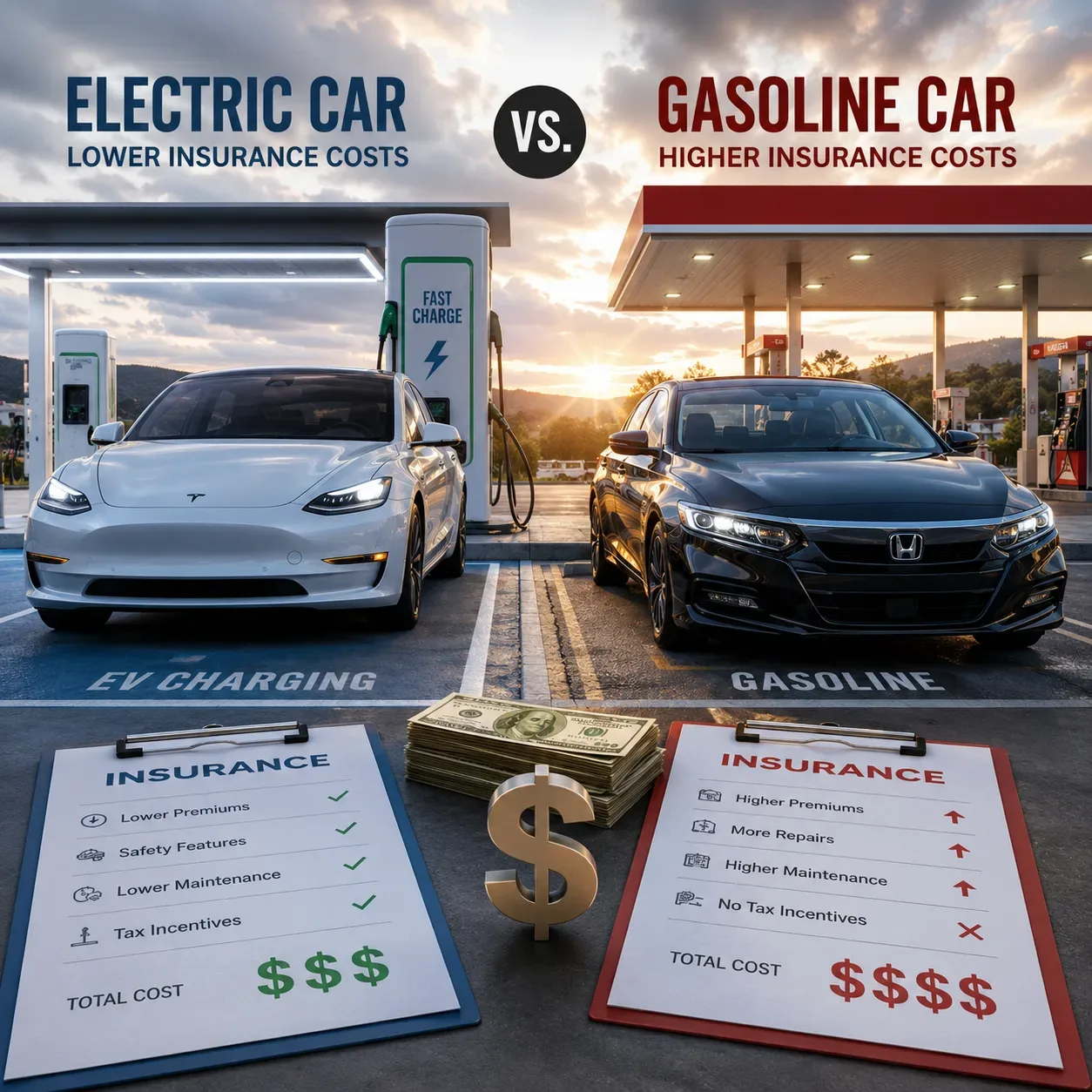
Across the USA in 2026, electric car insurance costs between 20% and 40% more than comparable gas-powered vehicles. Some premium EV models cost thousands more annually to insure. Drivers expecting savings from fuel and maintenance are often surprised to discover that insurance can significantly increase total ownership costs.

So why exactly does EV insurance cost more? Are insurance companies unfairly charging electric vehicle owners? Or are there real reasons behind the higher premiums?

More importantly — what can you actually do to lower your EV insurance costs in 2026?

This complete guide explains everything you need to know about electric vehicle insurance in the United States, including why prices are rising, which companies offer the best coverage, how batteries affect insurance claims, and the smartest ways to reduce your premium.


Why Electric Car Insurance Costs More in 2026

Insurance companies calculate risk very carefully. When insurers evaluate electric vehicles, they see several expensive factors that increase claim costs compared to traditional cars.

1. Electric Vehicles Are More Expensive to Buy

The first reason is simple: EVs usually cost more upfront.

Even though electric vehicle prices have fallen over the past few years, most EVs still have higher sticker prices than equivalent gasoline vehicles. Since insurers base coverage partly on vehicle value, a more expensive car naturally leads to a higher premium.

For example, replacing a totaled Tesla Model Y costs significantly more than replacing a similarly sized gasoline SUV. Insurance companies account for that increased replacement cost when pricing policies.

2. Battery Packs Are Extremely Expensive

The battery is the single most expensive component inside an electric vehicle.

Modern EV battery packs can cost anywhere from $10,000 to over $25,000 depending on the model. Even relatively small damage near the battery system can trigger expensive inspections or complete replacement recommendations.

In many accident cases, insurers choose to total EVs rather than risk future battery safety issues. This dramatically increases insurance company payouts.

Battery fire risks, thermal runaway concerns, and specialized repair requirements also increase claim complexity.

3. EV Repairs Require Specialized Technicians

Electric vehicles cannot be repaired at every traditional auto body shop.

Most EVs require specially trained high-voltage technicians who understand advanced electrical systems, battery management modules, autonomous driving sensors, and manufacturer-certified repair procedures.

Certified EV repair facilities are still limited in many states. Fewer qualified repair shops create longer wait times, higher labor costs, and more expensive claims overall.

4. Advanced Technology Increases Repair Costs

Modern EVs include some of the most advanced automotive technology ever developed.

Features like:

  • Autopilot systems
  • Adaptive cruise control
  • 360-degree cameras
  • Radar sensors
  • Lidar systems
  • Lane-keeping technology
  • AI-assisted driving features

make repairs much more expensive after even minor accidents.

A simple bumper replacement on some EVs can require recalibration of multiple sensors and cameras, turning a basic repair into a multi-thousand-dollar insurance claim.

5. Insurers Still Have Limited Historical Data

Traditional gasoline vehicles have decades of insurance claim history behind them. Insurance companies know exactly how much repairs usually cost and how often certain vehicles are involved in accidents.

Electric vehicles are still relatively new compared to traditional cars.

Because insurers have less long-term claims data, they often price EV policies more cautiously. Uncertainty leads to higher premiums.


Average EV Insurance Costs in the USA (2026)

Average annual full coverage insurance costs for popular EVs in 2026 include:

  • Tesla Model 3: $2,200 – $3,100 per year
  • Tesla Model Y: $2,400 – $3,500 per year
  • Tesla Model S: $3,500 – $5,200 per year
  • Ford Mustang Mach-E: $1,900 – $2,800 per year
  • Chevrolet Bolt EUV: $1,700 – $2,400 per year
  • Rivian R1T: $3,200 – $4,700 per year
  • Hyundai Ioniq 6: $1,800 – $2,500 per year
  • Kia EV9: $2,100 – $3,000 per year

For comparison, the average gas-powered vehicle in America costs roughly $1,700–$2,200 annually for full coverage in 2026.


Best Insurance Companies for Electric Cars in 2026

Tesla Insurance

Tesla Insurance remains one of the best options for Tesla owners. The company uses real-time driving behavior through its Safety Score system to personalize premiums. Safe drivers can save substantial amounts compared to traditional insurers.

GEICO

GEICO consistently offers strong pricing for affordable EV models like the Chevrolet Bolt, Nissan Leaf, and Hyundai Ioniq. Their digital tools and multi-policy discounts make them attractive for budget-conscious EV owners.

State Farm

State Farm remains one of the most trusted insurance companies in America and offers excellent EV support through its Drive Safe & Save program. Their large repair network helps reduce repair delays.

Progressive

Progressive’s Snapshot telematics program is especially useful for EV owners who drive carefully and log fewer annual miles.

Nationwide

Nationwide stands out because it offers optional protection for EV charging equipment and charging cables — something many insurers still overlook.


Does EV Insurance Cover Battery Damage?

In most cases, yes.

Comprehensive and collision coverage usually protects EV batteries against:

  • Accident damage
  • Fire
  • Flooding
  • Theft
  • Weather-related damage

However, standard insurance generally does NOT cover:

  • Normal battery degradation
  • Manufacturer defects
  • Warranty-related failures
  • Damage caused by improper charging

Always ask your insurer specifically how battery claims are handled before purchasing a policy.


How to Save Money on EV Insurance in 2026

Although EV insurance is expensive, smart drivers can still lower their premiums significantly.

Compare Multiple Quotes

EV insurance pricing varies dramatically between companies. The difference between the cheapest and most expensive quote can exceed $1,500 annually for the same vehicle.

Use Telematics Programs

Programs like Tesla Safety Score, Progressive Snapshot, and State Farm Drive Safe & Save reward safe driving habits with major discounts.

Bundle Insurance Policies

Combining home, renters, and auto insurance policies often reduces premiums by 10–25%.

Increase Your Deductible

Choosing a higher deductible can substantially lower your monthly insurance cost.

Maintain a Clean Driving Record

Nothing impacts insurance pricing more than driving history. Safe drivers consistently pay less regardless of vehicle type.

Choose an Affordable EV

Not all EVs cost the same to insure. Tesla and Rivian models are often significantly more expensive than vehicles like the Chevrolet Bolt or Hyundai Ioniq.


Final Thoughts

Electric vehicles are changing transportation across America, but insurance costs remain one of the biggest ownership challenges in 2026.

Higher repair costs, expensive battery systems, advanced technology, and limited historical claims data all contribute to elevated premiums. However, the market is slowly improving as insurers gain more experience with EVs and repair infrastructure expands nationwide.

The key to saving money is simple: compare multiple quotes, use safe-driving discount programs, bundle policies, and research insurance costs before purchasing your EV.

The future of transportation is electric — and smart insurance decisions will play a major role in making EV ownership affordable for millions of Americans.


Disclaimer: Insurance prices vary based on state, age, driving history, vehicle model, credit profile, and coverage levels. Always obtain personalized quotes directly from licensed insurance providers before purchasing a policy.

Friday, 15 May 2026

Medicare 2026 – What It Covers, Who Qualifies, and How to Enroll

Medicare 2026 – What It Covers, Who Qualifies, and How to Enroll

Published: May 2026 | Category: Health Insurance | Reading Time: 9 min


Understanding Medicare can save you thousands of dollars — and prevent costly coverage gaps.

Every year, millions of Americans turn 65 and face the same confusing moment: Medicare enrollment. There are deadlines to hit, parts to understand, plans to compare, and penalties to avoid — all at a time when most people are already navigating retirement or major life changes.

Get it right, and you have solid, affordable health coverage. Get it wrong — miss a deadline, pick the wrong plan, or misunderstand what's covered — and you could face lifetime premium penalties or unexpected out-of-pocket costs in the thousands.

This guide cuts through the confusion. Here's everything you need to know about Medicare in 2026: what it covers, what it costs, when to enroll, and how to avoid the most common mistakes.


What Is Medicare?

Medicare is the federal health insurance program for Americans aged 65 and older, as well as certain younger people with disabilities or specific medical conditions like End-Stage Renal Disease (ESRD) or ALS. It is run by the Centers for Medicare & Medicaid Services (CMS) and is one of the largest health insurance programs in the world, covering over 65 million Americans.

Unlike Medicaid (which is income-based), Medicare eligibility is based on age and work history — not income level.


The Four Parts of Medicare — Explained Clearly


Medicare Part A — Hospital Insurance

Part A covers inpatient hospital care, skilled nursing facility care (after a qualifying hospital stay), hospice care, and some home health services.

Cost in 2026: Most people pay $0 premium for Part A, because they (or their spouse) paid Medicare taxes for at least 10 years while working. If you didn't work long enough, you can pay a premium of up to $505/month.

Deductible: $1,676 per benefit period in 2026 (this is the amount you pay before Medicare kicks in for hospital stays).

What it does NOT cover: Long-term custodial care (nursing homes), dental, vision, or hearing.

Medicare Part B — Medical Insurance

Part B covers outpatient medical services: doctor visits, preventive care, lab tests, X-rays, mental health services, durable medical equipment (wheelchairs, walkers), and some home health services.

Standard premium in 2026: $185/month (deducted from Social Security for most enrollees)

Deductible: $257/year, after which Medicare pays 80% of covered services

Important: You pay 20% of costs (coinsurance) for most Part B services with no out-of-pocket maximum — which is why many people add a Medigap or Medicare Advantage plan.

Medicare Part C — Medicare Advantage

Part C (Medicare Advantage) is an alternative way to get your Medicare coverage. Instead of Original Medicare (Parts A and B), you enroll in a private insurance plan approved by Medicare. These plans must cover everything Original Medicare covers and often include additional benefits like dental, vision, hearing, and prescription drugs.

Premium: Varies by plan — many Medicare Advantage plans have $0 premium, though you still pay your Part B premium

Structure: Usually HMO or PPO format, with a network of doctors you must use

Out-of-pocket maximum: All Medicare Advantage plans cap out-of-pocket costs — in 2026 the federal cap is $9,350 for in-network services

Best for: People who want extra benefits (dental, vision, gym) and are comfortable with a network of providers

Medicare Part D — Prescription Drug Coverage

Part D adds prescription drug coverage to Original Medicare (Parts A and B). It is sold by private insurance companies approved by Medicare. Each plan has its own formulary (list of covered drugs), premiums, and cost-sharing structure.

Average premium in 2026: Approximately $46/month, though plans range widely

Major 2026 change: Thanks to the Inflation Reduction Act, the out-of-pocket maximum for Part D drugs is now capped at $2,000 per year — a significant protection for people on expensive medications

Late enrollment penalty: 1% of the national base premium for every month you go without Part D coverage after becoming eligible — this penalty lasts for life


What Is Medigap (Medicare Supplement Insurance)?

Original Medicare covers roughly 80% of your medical costs. The remaining 20% — with no out-of-pocket cap — can add up dramatically if you have a serious illness or extended hospitalization.

Medigap (also called Medicare Supplement insurance) fills those gaps. These are private insurance policies that pay some or all of the costs Original Medicare doesn't cover: deductibles, coinsurance, and copayments.

There are ten standardized Medigap plans (labeled A through N), and the most popular ones are Plan G and Plan N. Plan G covers nearly everything Original Medicare doesn't, except the Part B deductible. Average monthly premiums range from $100 to $300+, depending on your age, state, and insurer.

Key difference from Medicare Advantage: With Medigap, you can see any doctor who accepts Medicare — no network restrictions. This makes it ideal for people who travel frequently or want maximum provider flexibility.


Medicare Enrollment — Deadlines You Cannot Miss

Medicare has specific enrollment windows, and missing them can result in lifetime premium penalties and coverage gaps. Here's what you need to know:

Initial Enrollment Period (IEP)

This is your first opportunity to sign up for Medicare. It is a 7-month window that begins 3 months before the month you turn 65, includes your birth month, and ends 3 months after.

Example: If you turn 65 in September, your IEP runs from June through December.

Important: Enrolling in the 3 months before your birthday month means coverage starts right when you turn 65. Enrolling after your birthday month means a delay in coverage start.

General Enrollment Period (GEP)

If you miss your Initial Enrollment Period and don't qualify for a Special Enrollment Period, you must wait for the General Enrollment Period: January 1 through March 31 each year. Coverage starts July 1. You may owe a late enrollment penalty.

Special Enrollment Period (SEP)

If you are still working at 65 and covered by employer health insurance, you can delay Medicare enrollment without penalty. You have a Special Enrollment Period: 8 months after your employer coverage ends to sign up for Part B without a late penalty.

Annual Open Enrollment (Medicare Advantage and Part D)

October 15 through December 7 each year is when you can change Medicare Advantage plans or Part D drug plans. Changes take effect January 1 of the following year.


Late Enrollment Penalties — Know These Before You Decide to Wait

Medicare penalties are serious and permanent. These are not one-time fees — they are added to your premium for as long as you have Medicare:

  • Part B late penalty: 10% added to your Part B premium for every 12-month period you were eligible but didn't enroll. This penalty lasts for life.
  • Part D late penalty: 1% of the national average premium for every month you go without creditable drug coverage. This penalty also lasts for life.
  • Part A late penalty: 10% added to your Part A premium for twice the number of years you were eligible but didn't enroll (only applies if you owe a Part A premium).

The exception: If you have employer-sponsored health insurance through an active job (yours or a spouse's) that is considered "creditable coverage," you can delay enrollment without penalty.


Medicare vs. Medicare Advantage — Which Is Better?

This is one of the most important decisions you'll make. Neither is universally better — the right choice depends entirely on your health needs, budget, and lifestyle.

Choose Original Medicare + Medigap if:

  • You want access to any doctor or hospital in the USA that accepts Medicare
  • You travel frequently or spend time in multiple states
  • You have complex medical needs and want maximum provider flexibility
  • You don't mind paying separate premiums for Part B, Medigap, and Part D

Choose Medicare Advantage if:

  • You want extra benefits like dental, vision, and hearing in one plan
  • You have a $0 or low monthly premium as a priority
  • You have predictable health needs and are comfortable using a network of providers
  • You live in an area with strong Medicare Advantage plan options

Does Medicare Cover Dental, Vision, and Hearing?

This is one of the most frequently asked Medicare questions — and the answer surprises many people.

Original Medicare (Parts A and B) does NOT cover:

  • Routine dental care (cleanings, fillings, dentures)
  • Routine vision care (eye exams for glasses or contacts)
  • Hearing aids or routine hearing exams

These are among the most significant gaps in Medicare coverage, and they affect millions of older Americans who need dental work or hearing aids but face high out-of-pocket costs.

Your options to get these covered:

  • Medicare Advantage plans — Most include some dental, vision, and hearing benefits. Coverage and limits vary significantly by plan.
  • Standalone dental/vision/hearing plans — Private insurance plans specifically for these services, available to Medicare beneficiaries separately.
  • Medicare Savings Programs — For lower-income beneficiaries, state programs may help cover costs Original Medicare doesn't.

5 Most Common Medicare Mistakes to Avoid

  1. Missing your Initial Enrollment Period. Many people don't realize their IEP starts 3 months before they turn 65. Waiting until after your birthday month can delay coverage and trigger penalties.
  2. Assuming Medicare is free. Part A may be premium-free, but Part B costs $185/month, plus deductibles and 20% coinsurance with no cap. Budget for these costs.
  3. Not getting Part D because you don't take many medications. Even if you're healthy now, skipping Part D will cost you a lifetime penalty. Enroll in the lowest-cost plan available if you don't need it yet.
  4. Choosing Medicare Advantage without checking your doctors are in-network. If your current doctors don't participate in your chosen Medicare Advantage plan, you'll either pay more to see them or need to switch providers.
  5. Missing the Medigap open enrollment window. You have 6 months from when you first enroll in Part B to buy a Medigap policy with guaranteed issue rights (no medical questions asked). After this window closes, insurers can deny coverage or charge more based on your health history.

Frequently Asked Questions

When should I sign up for Medicare?

Enroll during your Initial Enrollment Period — the 7-month window around your 65th birthday. If you're still working and have employer coverage, you can delay without penalty, but sign up within 8 months of losing that coverage.

What is the Medicare income limit?

There is no income limit for Medicare eligibility. However, higher-income beneficiaries pay more for Parts B and D through IRMAA (Income-Related Monthly Adjustment Amount). In 2026, individuals earning over $106,000 pay higher Part B premiums.

Can I have Medicare and employer insurance at the same time?

Yes. If you work for a company with 20+ employees and have employer coverage, your employer insurance is the primary payer and Medicare is secondary. For companies with fewer than 20 employees, Medicare becomes primary.

Is Medicare the same as Medicaid?

No — they are completely different programs. Medicare is a federal program based on age and work history. Medicaid is a joint federal-state program based on income and financial need. Some people qualify for both (called "dual eligibles") and receive coordinated coverage.


Final Thoughts

Medicare is one of the most valuable benefits most Americans will ever receive. But it only works well if you understand it, enroll on time, and choose the right plan for your situation.

Start by enrolling in Parts A and B during your Initial Enrollment Period. Then decide whether Original Medicare + Medigap or Medicare Advantage is the right fit for your health needs and budget. Add Part D for prescription drug coverage. And review your plan every year during Open Enrollment — your health needs and plan offerings both change.

If the options feel overwhelming, your State Health Insurance Assistance Program (SHIP) offers free, unbiased Medicare counseling in every state. Use it.


Disclaimer: Medicare rules, premiums, and deductibles change annually. Always verify current information at Medicare.gov or with a licensed Medicare advisor. This article is for informational purposes only. 

Tuesday, 12 May 2026

Best Home Insurance Companies in USA 2026 – Compare Rates & Coverage


Best Home Insurance Companies in USA 2026 – Compare Rates & Coverage

Published: May 2026 | Category: Home Insurance | Reading Time: 8 min

Your home is your most valuable asset — the right insurance protects everything inside it.

For most Americans, their home is the single biggest investment they will ever make. And yet, millions of homeowners are either underinsured, overpaying for coverage, or carrying a policy that has significant gaps they don't know about — until something goes wrong.

Home insurance rates have increased significantly in recent years. Inflation, extreme weather events, rising repair costs, and construction labor shortages have all pushed premiums higher across the country. In 2026, finding the right balance between adequate coverage and a manageable premium requires more research than ever.

This guide breaks down the best home insurance companies in the USA for 2026, what coverage you actually need, and the smartest ways to lower your premium without cutting corners on protection.


What Does Home Insurance Actually Cover?

A standard homeowners insurance policy (called an HO-3 in industry terminology) typically covers six main areas:

  • Dwelling coverage: Pays to repair or rebuild your home's structure if it's damaged by a covered event — fire, wind, hail, lightning, and more
  • Other structures: Covers detached structures on your property like garages, fences, and sheds
  • Personal property: Covers your belongings — furniture, electronics, clothing — if they're stolen or damaged
  • Loss of use: Pays your additional living expenses (hotel, meals) if your home becomes temporarily uninhabitable
  • Liability protection: Covers legal costs if someone is injured on your property and sues you
  • Medical payments: Pays medical bills for guests injured on your property, regardless of fault

What standard policies typically do NOT cover: flooding (requires a separate flood insurance policy), earthquakes (separate policy needed), normal wear and tear, and pest infestations. If you live in a flood-prone area, flood insurance through FEMA's National Flood Insurance Program (NFIP) is essential.


Top 6 Best Home Insurance Companies in USA 2026

1. State Farm – Best Overall

State Farm remains the largest home insurer in the United States, and for good reason. They offer a comprehensive range of coverage options, a massive network of local agents across the country, and consistently strong customer satisfaction scores. Their website and mobile app make managing your policy and filing claims straightforward and fast.

State Farm also offers significant discounts for bundling home and auto insurance — typically 17–23% — making them especially valuable if you want to consolidate your insurance with one provider.

Best for: Homeowners who want a trusted, nationwide insurer with local agent support
Standout feature: Largest home insurance network in the USA, excellent mobile app

2. Amica – Best for Customer Satisfaction

Amica consistently earns the highest customer satisfaction scores in the home insurance industry, ranking at or near the top of J.D. Power surveys year after year. Their dividend policies — which return a portion of your premium back to you if the company performs well — are a unique feature that very few insurers offer. If customer service and claims experience matter most to you, Amica is the top choice.

Best for: Homeowners who prioritize excellent service and claims handling
Standout feature: Dividend policies that can return 5–20% of your premium annually

3. USAA – Best for Military Families

For active military members, veterans, and their immediate families, USAA offers some of the lowest home insurance rates in the country combined with exceptional customer service. Their claims process is consistently rated as one of the smoothest in the industry, and they offer unique military-specific coverage options like coverage for uniforms and equipment.

Best for: Military families
Eligibility: Active military, veterans, and immediate family members only
Standout feature: Military-specific coverages and consistently excellent claims service

4. Allstate – Best for Bundling and Discounts

Allstate offers one of the most extensive discount programs in the home insurance industry. Beyond the standard home-and-auto bundle discount, they offer discounts for new homebuyers, claims-free history, impact-resistant roofing, home safety devices, and more. Their Drivewise app also makes bundling auto insurance seamless.

Best for: Homeowners with multiple policies to bundle
Standout feature: Multiple discount options — new home, claims-free, roof material, safety device discounts

5. Erie Insurance – Best for Comprehensive Coverage

Erie is a regional insurer available in 12 states and Washington D.C., but in the areas it serves, it consistently offers some of the best value in the market. Their standard policy includes several features that most companies charge extra for — like guaranteed replacement cost coverage, which pays to rebuild your home to current standards even if costs exceed your policy limit.

Best for: Homeowners who want maximum coverage without paying extra for every add-on
Availability: 12 states and D.C. only
Standout feature: Guaranteed replacement cost included in standard policy

6. Nationwide – Best for Customization

Nationwide allows homeowners to build a highly customized policy with a wide range of optional add-ons. Their Brand New Belongings coverage — which pays replacement cost rather than depreciated value for damaged personal property — is a standout feature. They also offer a vanishing deductible program that reduces your deductible by $100 for every year you go without a claim.

Best for: Homeowners who want to customize their coverage precisely
Standout feature: Brand New Belongings coverage + vanishing deductible program


How Much Home Insurance Do You Need?


The most important number in your home insurance policy is your dwelling coverage limit — the maximum amount the policy will pay to rebuild your home. This number should reflect the cost to rebuild your home, not its market value or what you paid for it.

These are two very different numbers. The market value includes your land, which doesn't need to be insured. The rebuild cost depends on current construction materials, labor costs, and the square footage and features of your home.

A common mistake homeowners make is insuring their home for its purchase price or market value. If rebuild costs in your area have risen — and they have significantly in recent years due to inflation and labor shortages — your policy may leave you significantly underinsured after a total loss.

Ask your insurer about guaranteed replacement cost coverage or extended replacement cost coverage — these ensure your home is fully covered even if rebuild costs exceed your coverage limit.


Average Home Insurance Costs by State in 2026

Home insurance premiums vary dramatically depending on where you live:

  • Most expensive states: Florida, Louisiana, Oklahoma, Texas, and Kansas — driven by hurricane risk, tornado frequency, and high litigation costs
  • Least expensive states: Hawaii, Delaware, Vermont, and Oregon — lower risk profiles and more stable weather
  • National average: Approximately $1,700–$2,200 per year for a standard policy on a median-value home

In high-risk states like Florida, some homeowners are seeing premiums of $5,000–$10,000+ per year as private insurers have pulled back from the market due to hurricane exposure and fraud. If you live in Florida or another high-risk state, shopping around aggressively and considering state-backed insurance options is especially important.


7 Ways to Lower Your Home Insurance Premium

  1. Bundle with auto insurance. Combining your home and auto policies with the same insurer typically saves 10–25% on both policies. This is the single biggest discount available to most homeowners.
  2. Raise your deductible. Increasing your deductible from $1,000 to $2,500 can reduce your annual premium by 10–20%. Just make sure you have enough in savings to cover the higher deductible.
  3. Install safety and security devices. Smoke detectors, deadbolt locks, security cameras, and monitored alarm systems all qualify for discounts with most insurers — typically 5–15%.
  4. Upgrade your roof. An impact-resistant roof (Class 4 rating) can qualify for significant discounts — sometimes 20–30% — because it dramatically reduces hail and wind damage claims.
  5. Maintain a claims-free history. Many insurers offer discounts for homeowners who go 3–5 years without filing a claim. Avoid filing small claims that might cost less than your premium increase over the following years.
  6. Improve your credit score. In most states, insurers use your credit score as a factor in setting your premium. A higher credit score typically means a lower home insurance rate.
  7. Shop around every 1–2 years. Home insurance is not a set-it-and-forget-it product. Rates change, your home's value changes, and your risk profile changes. Getting new quotes every year or two can uncover significant savings.

Frequently Asked Questions

Is home insurance required by law?

No — unlike car insurance, home insurance is not legally required in any US state. However, if you have a mortgage, your lender will almost certainly require it as a condition of the loan. And even without a mortgage, going without home insurance is a serious financial risk — one major fire or storm could cost you everything.

What's the difference between actual cash value and replacement cost coverage?

This is one of the most important distinctions in home insurance. Actual cash value (ACV) coverage pays the depreciated value of damaged items — so a 10-year-old roof would be paid out at a fraction of what a new roof costs. Replacement cost coverage pays what it actually costs to replace or rebuild at current prices. Replacement cost coverage is more expensive but significantly better protection.

Does home insurance cover flooding?

No — standard homeowners insurance does not cover flooding from external water sources like rivers, storms, or heavy rain. Flood insurance must be purchased separately, either through FEMA's National Flood Insurance Program (NFIP) or through private flood insurers. If you live in a flood zone, this coverage is essential.

How do I file a home insurance claim?

Document the damage thoroughly with photos and video before doing any cleanup. Contact your insurer immediately — most have 24/7 claims hotlines or mobile app reporting. An adjuster will be assigned to assess the damage. Keep all receipts for emergency repairs or temporary housing. The cleaner and more thorough your documentation, the smoother your claim will go.

What is liability coverage in home insurance?

Liability coverage pays your legal defense costs and any settlement or judgment if someone is injured on your property and holds you responsible. It also covers injuries or damage your household members cause to others away from your home. Standard policies include $100,000 of liability coverage, but many experts recommend increasing this to $300,000–$500,000 for better protection.


Final Verdict

Here's a quick summary of the best choices by situation:

  • Best overall: State Farm
  • Best customer service: Amica
  • Best for military: USAA
  • Best for bundling: Allstate
  • Best comprehensive coverage: Erie Insurance
  • Best customization: Nationwide
The most important step you can take today is to compare quotes from at least 3–4 insurers and make sure your dwelling coverage limit actually reflects what it would cost to rebuild your home at current prices — not what you paid for it years ago.
Take 20 minutes this week to review your existing policy or get new quotes. For most homeowners, it's one of the easiest ways to save hundreds of dollars per year while making sure you're truly protected.
Disclaimer: Insurance rates vary by state, home value, and individual risk profile. Always get personalized quotes directly from insurers. This article is for informational purposes only

Monday, 11 May 2026

Best Personal Loans for Bad Credit in USA 2026 – Top Lenders Compared


Best Personal Loans for Bad Credit in USA 2026 – Top Lenders Compared

Published: May 2026 | Category: Personal Loans | Reading Time: 9 min

Bad credit doesn't mean no options — the right lender can still get you approved in 2026.

Having a low credit score can feel like a locked door. Banks turn you down, traditional lenders say no, and the options that remain look scary — high interest rates, hidden fees, and confusing terms. But here's the reality: you are not out of options.

In 2026, millions of Americans with bad credit successfully secured personal loans by going to the right lenders. Several reputable companies now specialize in working with borrowers who have low credit scores, using income verification, employment history, and AI-based underwriting to approve applicants that traditional banks routinely reject.

This guide breaks down the best personal loans for bad credit in the USA for 2026 — honest comparisons, real rates, and the smartest strategies to improve your approval odds.


What Is Considered Bad Credit in the USA?

Most lenders in the United States use the FICO credit score system, which runs from 300 (worst) to 850 (best). Here's how credit scores are typically classified:

  • 800–850: Exceptional
  • 740–799: Very Good
  • 670–739: Good
  • 580–669: Fair
  • Below 580: Bad / Poor credit

If your score is below 580, you are considered a bad credit borrower. This doesn't mean you can't get a loan — but it does mean your interest rate will be higher, your loan amount may be lower, and fewer lenders will work with you. If your score is below 500, approval becomes significantly harder, though not impossible.


Best Personal Loan Lenders for Bad Credit in USA 2026


1. Upstart – Best for Thin Credit History

Upstart is one of the most innovative lenders in the USA for bad credit borrowers, because it doesn't rely solely on your credit score. Instead, it uses an AI-driven underwriting model that considers your education, employment history, and income potential alongside your credit score. This means people with limited credit history or lower scores — but stable income — often get approved when traditional lenders say no.

Min. credit score: 300 (one of the lowest available)
Loan amount: $1,000 – $50,000
APR range: Varies; competitive for the bad credit segment
Funding time: As fast as 1 business day
Best for: Borrowers with limited credit history but strong income

2. Avant – Best for Predictable Monthly Payments

Avant is a solid option if you want a straightforward loan with predictable monthly payments and a clear repayment schedule. They accept credit scores as low as 550, offer loan amounts up to $35,000, and often fund loans the next business day. The main downside is an origination fee of up to 9.99%, which is added to your loan cost.

Min. credit score: 550
Loan amount: Up to $35,000
Funding time: Next business day
Best for: Borrowers who want stable, structured repayment terms

3. OneMain Financial – Best for 500 Credit Score

OneMain Financial is one of only a handful of major lenders that will approve borrowers with a credit score as low as 500. They offer both secured and unsecured loans, and having collateral (like a car) can significantly improve your approval chances and rate. OneMain has physical branch locations across the USA if you prefer to apply in person.

Min. credit score: 500
Loan types: Secured and unsecured
Best for: People with very low credit scores who need guaranteed approval options
Standout feature: In-person application option at local branches

4. Upgrade – Best for Credit Improvement

Upgrade is designed not just to give you a loan, but to help improve your financial health over time. They accept lower credit scores than similar lenders, offer multiple rate discounts (autopay, direct pay), and provide terms up to seven years — giving you more flexibility on monthly payments. They also offer credit monitoring tools to help you track your score as it improves.

Loan amount: Up to $50,000
Term lengths: Up to 7 years
Availability: All 50 states and D.C.
Best for: Borrowers focused on long-term credit improvement

5. LendingClub – Best for Co-Borrowers

LendingClub connects borrowers with investors, which can sometimes result in more flexible approval criteria than you'd find at a traditional bank. One of their key advantages: they allow co-borrowers on personal loan applications. If you have a friend or family member with better credit willing to co-apply, your combined application can significantly improve your rate and approval odds.

Availability: All 50 states and D.C.
Funding time: 1–2 business days after approval
Best for: Borrowers who can apply with a co-borrower

6. Universal Credit – Best for Debt Consolidation

Universal Credit is specifically designed for fair to bad credit borrowers who want to consolidate existing debt into a single, manageable monthly payment. This can be a smart move if you have multiple high-interest credit card balances — rolling them into one personal loan with a fixed rate simplifies your finances and can save money over time.

Availability: All 50 states and D.C.
Best for: Debt consolidation with bad credit


What Interest Rate Will You Pay with Bad Credit?

Being realistic about rates is important when shopping for bad credit loans. Here's what to expect:

  • Good credit (670+): APR typically 8–20%
  • Fair credit (580–669): APR typically 20–28%
  • Bad credit (below 580): APR typically 28–36%
  • Very bad credit (below 500): APR can exceed 36% — use extreme caution

According to LendingTree data, the average APR for borrowers with bad credit is around 30.25%. Borrowers with sub-580 scores who used Credible's marketplace received an average rate from Reprise Financial of about 28.30% — roughly 2–4 percentage points lower than comparable lenders.

One important warning: avoid any lender offering APRs above 36%. Rates above this threshold are considered predatory and can trap borrowers in a cycle of debt that's very hard to escape.


How to Improve Your Approval Chances — Even with Bad Credit

There are specific steps you can take right now to improve your odds of getting approved and getting a better rate:

1. Check Your Credit Report for Errors

Download your free credit reports from AnnualCreditReport.com and review them carefully. Errors — such as a paid account showing as unpaid — are surprisingly common and can drag down your score unnecessarily. Dispute any errors you find with the credit bureau reporting them. Fixing errors can raise your score by 20–50 points.

2. Prequalify with Multiple Lenders

Most reputable lenders allow you to check your rate with a soft credit pull — meaning it won't hurt your score. Prequalifying with 3–5 lenders lets you compare real offers side by side before you formally apply. Never apply with multiple lenders at the same time using hard pulls — this damages your credit.

3. Add a Co-Borrower or Co-Signer

If a friend or family member with better credit is willing to co-sign or co-apply with you, your combined application is much stronger. The lender will consider both credit profiles, which can improve your approval odds and dramatically lower your interest rate.

4. Apply for a Smaller Amount

The more you ask to borrow, the higher the risk for the lender. If you're struggling to get approved, try applying for a smaller loan amount. You can always apply for more later once you've established a positive payment history with that lender.

5. Consider Secured Loans

A secured personal loan — backed by collateral like a vehicle or savings account — is much easier to get approved for with bad credit, because the lender has a way to recover their money if you default. OneMain Financial and some credit unions offer secured personal loans specifically for this purpose.

6. Raise Your Score First if Possible

Even improving your score from 550 to 580 can open up significantly more lenders and lower your rate. Simple steps like paying down credit card balances, making all payments on time for 2–3 months, and removing errors from your report can produce visible improvements relatively quickly.


Warning Signs of Predatory Lenders — Avoid These

Not every lender that targets bad credit borrowers is trustworthy. Watch out for these red flags:

  • Guaranteed approval before checking your credit — No legitimate lender guarantees approval without reviewing your application
  • They contact you first — Legitimate lenders don't cold call or send unsolicited offers asking for personal information
  • APRs above 36% — This is the threshold that most consumer protection advocates identify as predatory
  • Pressure to decide immediately — Reputable lenders give you time to review terms carefully
  • Upfront fees before funding — Legitimate lenders deduct origination fees from your loan amount — they never ask for payment before sending your money
  • No physical address or online footprint — Always verify the lender exists and is licensed in your state

Alternatives to Personal Loans for Bad Credit

If a personal loan isn't the right fit, consider these alternatives:

Secured credit cards: Use a cash-backed card to build credit and access funds with lower interest rates. After 6–12 months of responsible use, many secured cards convert to regular unsecured cards.

Credit union loans: Credit unions are non-profit financial institutions that typically offer more flexible lending criteria and lower rates than traditional banks — especially for members with bad credit.

Home equity loans (if you own a home): If you have equity in your home, a home equity loan or HELOC may be accessible even with poor credit, and at significantly lower rates than unsecured bad credit loans. However, your home is collateral — defaulting means losing it.

Borrow from family or friends: If possible, borrowing from people you trust avoids high interest rates entirely. Just make sure to document the agreement in writing to protect the relationship.


Frequently Asked Questions

Can I get a personal loan with a 500 credit score?

Yes — Upstart and OneMain Financial both offer loans to borrowers with credit scores as low as 500. However, approval is not guaranteed, and rates will be near the top of each lender's range. Your income, employment stability, and debt-to-income ratio all factor into the decision.

Will applying for a loan hurt my credit score?

Prequalifying with a soft credit check will not affect your score. However, formally applying triggers a hard credit inquiry, which typically drops your score by 5–10 points temporarily. As long as you make payments on time, this drop is short-lived.

How fast can I get money from a bad credit loan?

Many online lenders fund loans within 1–2 business days after approval. Some, including Avant and Upstart, can fund as quickly as the next business day in some cases.

How much can I borrow with bad credit?

Most bad credit lenders offer between $1,000 and $50,000. The lower your credit score, the lower the amount you're likely to be approved for. Starting with a smaller loan and repaying it successfully can qualify you for larger amounts in the future.


Final Thoughts

Bad credit is not a life sentence. It's a starting point — and the right personal loan, managed responsibly, can actually be a tool for building your credit back up. Every on-time payment improves your credit history, and over time, better options open up.

Start by prequalifying with Upstart, Avant, and OneMain Financial to see what rates you're offered — without affecting your credit score. Compare those offers carefully, choose the shortest term you can afford, and make every payment on time.

Your credit score doesn't define your financial future. But the decisions you make today absolutely will.


Disclaimer: Rates and loan terms vary by lender, state, and individual credit profile. Always compare multiple offers before accepting a loan. Data sourced from NerdWallet, Bankrate, LendingTree, and Credible (May 2026). This article is for informational purposes only.

Saturday, 9 May 2026

Best Term Life Insurance Companies in USA 2026 – Compare & Save


Best Term Life Insurance Companies in USA 2026 – Compare & Save

Published: May 2026 | Category: Life Insurance | Reading Time: 9 min

The right life insurance policy gives your family financial security — no matter what happens.

Nobody likes thinking about life insurance. But here's the truth: if someone depends on your income — a spouse, children, aging parents — then a term life insurance policy is one of the most important financial decisions you will ever make. And the good news is that it is far more affordable than most Americans realize.

According to industry research, roughly three-quarters of Americans overestimate how much a basic term life insurance policy costs. Many people assume it costs hundreds of dollars per month. In reality, a healthy 30-year-old can get $500,000 in coverage for as little as $20–25 per month.

In this guide, we break down the best term life insurance companies in the USA for 2026, how much coverage you actually need, and the smartest way to buy a policy without overpaying.


What Is Term Life Insurance — and How Does It Work?

Term life insurance is the simplest, most affordable type of life insurance. Here's how it works:

  • You choose a coverage amount (for example, $500,000)
  • You choose a term length — typically 10, 15, 20, or 30 years
  • You pay a fixed monthly premium for that period
  • If you pass away during the term, your beneficiaries receive the full payout — tax free
  • If you outlive the policy, it expires (and you can renew or convert to permanent coverage)

Term life is different from whole life or permanent insurance, which lasts your entire life and builds cash value. Term is simpler and significantly cheaper — making it the right choice for most families who need solid coverage at a manageable price.


Top 6 Best Term Life Insurance Companies in USA 2026


1. Guardian Life – Best Overall

Guardian tops multiple independent rankings for 2026, thanks to its combination of affordable rates, financial strength, and accessibility. What makes Guardian stand out is that it offers coverage to applicants living with HIV — a condition that makes it nearly impossible to find coverage with most other insurers. Guardian also has very few customer complaints relative to its size, which signals strong overall service quality.

Coverage amount: $100,000 to $5 million
Term lengths: 10, 15, 20, or 30 years
Age eligibility: 18 to 75
Standout feature: Accepts applicants with HIV — rare in the industry

2. Protective Life – Best for Affordable Long-Term Coverage

Protective Life earns the top spot for overall value from U.S. News, offering term lengths from 10 to 40 years — one of the longest available anywhere. Death benefits range from $100,000 to an impressive $50 million, making it a strong option for both everyday families and high-income earners who need substantial coverage. Rates are consistently among the most competitive in the market.

Coverage amount: $100,000 to $50 million
Term lengths: 10 to 40 years
Standout feature: Longest term lengths available — up to 40 years

3. New York Life – Best for Policy Flexibility

New York Life is one of the oldest and most financially stable insurers in the United States, with over 175 years in business. Their term policies can be renewed annually after the initial term ends, which gives policyholders unusual flexibility. They also consistently rank near the top of J.D. Power customer satisfaction studies.

Standout feature: Annually renewable term policies — rare and valuable
Best for: People who want maximum flexibility at renewal

4. USAA – Best for Military Families

USAA is in a class of its own for active military members, veterans, and their immediate families. Term life policies start at just $12 per month, with coverage up to $10 million. One unique feature: USAA allows term policyholders to increase their coverage after a major life event (marriage, new child) without a new medical exam — something most insurers simply don't offer.

Coverage amount: Up to $10 million
Starting premium: $12/month
Standout feature: Coverage increases after life events without new medical exam
Eligibility: Military members, veterans, and immediate family only

5. Transamerica – Cheapest Rates Available

If your primary goal is the lowest possible monthly premium, Transamerica delivers. Rates start as low as $7 per month for an 18-year-old with $100,000 in coverage on a 10-year term — the cheapest in the industry. However, Transamerica has a higher complaint rate than competitors, so if customer service matters as much as price, consider Banner Life or Penn Mutual instead.

Starting rate: $7/month (10-year term, $100K coverage, age 18)
Best for: Young, healthy applicants seeking the absolute lowest premium
Note: Higher complaint ratio than most competitors

6. Northwestern Mutual – Best Customer Experience

Northwestern Mutual consistently records one of the lowest customer complaint rates in the entire life insurance industry, and it ranks near the top of J.D. Power's customer satisfaction study year after year. If you want a company that will be easy to work with — especially when a claim needs to be filed — Northwestern Mutual is a top choice.

Standout feature: Exceptional customer service and claims experience
Best for: People who prioritize long-term relationship with their insurer


How Much Term Life Insurance Do You Actually Need?

This is the question most people get wrong. The most common rule of thumb is to get coverage equal to 10–12 times your annual income. But a more accurate approach considers:

  • Income replacement: How many years of income does your family need if you're gone?
  • Debt: Mortgage, car loans, student loans — your policy should cover these
  • Children's education: College costs for each child should be factored in
  • Final expenses: Funeral and burial costs average $10,000–$15,000 in the USA
  • Existing savings: Subtract any savings or investments your family already has

A practical example: If you earn $60,000 per year, have a $250,000 mortgage, two children, and modest savings, a $750,000 to $1 million policy on a 20-year term is a reasonable starting point.


How Much Does Term Life Insurance Cost in 2026?

Here are sample monthly rates for a healthy non-smoker purchasing a $500,000, 20-year term policy:

  • Age 25, male: ~$20–25/month
  • Age 25, female: ~$17–22/month
  • Age 35, male: ~$25–35/month
  • Age 35, female: ~$22–28/month
  • Age 45, male: ~$65–90/month
  • Age 45, female: ~$50–70/month
  • Age 55, male: ~$160–220/month
  • Age 55, female: ~$115–160/month

The single biggest lesson from these numbers: buy early. Every year you wait, your premiums increase. A 25-year-old locking in $500,000 of coverage for $22/month is one of the best financial decisions a young adult can make.


Term vs. Whole Life Insurance — Which Is Right for You?

This is one of the most common questions people ask when shopping for life insurance. Here's a clear breakdown:

Choose Term Life if:

  • You want maximum coverage at the lowest cost
  • You need coverage for a specific period (while children are young, while paying off mortgage)
  • You plan to build wealth through investments rather than an insurance policy
  • You are young and healthy

Choose Whole Life if:

  • You want coverage that lasts your entire life
  • You want the policy to build cash value over time
  • You have a high net worth and want permanent estate planning tools
  • You have a dependent (such as a special-needs child) who will always need support

For the majority of American families — especially those with young children and a mortgage — term life insurance is the smarter, more cost-effective choice.


5 Things to Check Before Buying a Term Life Policy

  1. Financial strength rating: Only buy from companies with an AM Best rating of A or higher. This ensures the company can pay claims decades from now.
  2. Conversion option: Can you convert to permanent coverage at the end of your term without a new medical exam? This is valuable flexibility to have.
  3. Riders available: Look for waiver of premium (if you become disabled, premiums are waived), accelerated death benefit (access funds if terminally ill), and child rider options.
  4. Medical exam requirement: Some policies require a physical exam; others offer no-exam coverage up to $1–2 million. No-exam policies are faster but slightly more expensive.
  5. Complaint ratio: Check the NAIC complaint index for your insurer. A ratio below 1.0 means fewer complaints than average — a good sign for service quality.

Frequently Asked Questions

What happens when my term life insurance expires?

When your term ends, coverage expires and your beneficiaries no longer receive a payout if you pass away. At that point, you have three options: let the policy lapse, renew it for another term (usually at higher premiums based on your age), or convert it to permanent coverage — if your policy includes a conversion option.

Can I get life insurance without a medical exam?

Yes. Several top insurers including Nationwide and Ethos offer no-exam term life policies, sometimes called "simplified issue" or "accelerated underwriting" policies. Coverage limits are typically capped at $1–2 million, and premiums are slightly higher than fully underwritten policies. If you are young and healthy, a traditional policy with a medical exam usually gets you a better rate.

At what age should I buy term life insurance?

The earlier the better. Your 20s and early 30s are the ideal time to lock in term life insurance, because rates are at their lowest and you are most likely to qualify for the best health classification. Every year you wait, your premiums increase. And if your health changes, you may end up paying significantly more — or being denied altogether.

Is life insurance payout taxable?

In most cases, no. Life insurance death benefits paid to beneficiaries are generally not subject to federal income tax. This is one of the significant advantages of life insurance as a financial planning tool. However, if the death benefit earns interest before being paid out, that interest may be taxable. Always consult a tax professional for your specific situation.

How many life insurance policies can I have?

There is no legal limit to how many life insurance policies you can own. Many financial planners recommend a strategy called "laddering" — owning multiple policies with different term lengths that expire as your financial obligations decrease over time. For example, a 30-year policy to cover your mortgage plus a 20-year policy to cover the years your children are dependent.


Final Verdict — Which Term Life Insurance Company Is Best for You?

Here's a quick summary to help you choose:

  • Best overall: Guardian Life
  • Best rates: Transamerica (young, healthy applicants)
  • Best for military: USAA
  • Best long-term coverage: Protective Life (up to 40-year terms)
  • Best customer service: Northwestern Mutual
  • Best flexibility: New York Life

No matter which company you choose, the most important step is to get multiple quotes and compare them side by side. Rates for the same coverage can vary by 40–60% between insurers. Use online comparison tools and get at least 3–4 quotes before making a decision.

And remember — the best time to buy life insurance was yesterday. The second best time is today.


Disclaimer: Rates shown are estimates for illustrative purposes. Actual premiums depend on age, health, state, and insurer. Consult a licensed insurance professional for personalized advice. Data sourced from NerdWallet, U.S. News, MoneyGeek, and Money.com (May 2026).

Friday, 8 May 2026

Cheap car insurance for young drivers


 Cheap Car Insurance for Young Drivers in USA 2026 – Best Rates Compared

Published: May 2026 | Category: Auto Insurance | Reading Time: 9 min

Finding cheap car insurance as a young driver is tough — but these tips and companies can save you hundreds every year.

If you are between 16 and 25 years old and shopping for car insurance in the USA, you already know the painful truth: young drivers pay the highest car insurance rates of any age group. On average, an 18-year-old pays around $514 per month for full coverage — more than triple what a 35-year-old pays for the same policy.

But here's the good news: the right company, the right discounts, and a few smart moves can cut that number significantly. In this guide, we break down the cheapest car insurance companies for young drivers in 2026, explain why rates are so high, and give you proven strategies to lower your premium today.


Why Is Car Insurance So Expensive for Young Drivers?

Insurance companies charge more for young drivers for one simple reason: statistics. Drivers aged 16 to 19 are more likely to be involved in accidents than any other age group, according to the CDC. Less experience behind the wheel means more risk for the insurer — and that risk gets priced into your monthly premium.

Here are the main factors that drive up costs for young drivers:

  • Limited driving history — Insurers have no data on your driving behavior, so they assume the worst.
  • Higher accident rates — Young drivers, especially males under 25, file more frequent and more expensive claims.
  • Distracted driving — Phone use while driving is highest among young adults, leading to more claims industry-wide.
  • Gender — In most states, young male drivers pay significantly more than young female drivers due to higher accident rates among men.

The gap does close over time. By age 25, rates drop considerably if you maintain a clean driving record. But until then, the right strategy can make a real difference in how much you pay.


Average Car Insurance Rates for Young Drivers in 2026


To give you a clear picture, here are the average monthly rates for young drivers based on age and gender for full coverage policies in 2026:

  • 16-year-old male: ~$614/month on own policy | ~$283/month on parent's policy
  • 16-year-old female: ~$580/month on own policy | ~$260/month on parent's policy
  • 18-year-old: ~$514/month for full coverage
  • 20-year-old: ~$307/month (Progressive, cheapest for this age)
  • 22-year-old: ~$301–$327/month
  • 25-year-old: Rates start dropping significantly — closer to adult rates

One of the most important takeaways from these numbers: staying on your parents' policy saves enormous money. A 16-year-old on a standalone policy pays an average of $10,638 per year. Added to a family plan, that same driver's share drops to roughly $3,403 per year — a 68% saving.


Best Cheap Car Insurance Companies for Young Drivers 2026

Not all insurance companies price young driver risk the same way. After comparing rates, discounts, customer satisfaction, and financial strength ratings, here are the top picks for 2026:

1. GEICO – Cheapest for Most Young Drivers

GEICO consistently ranks as one of the most affordable options for young drivers, particularly for 18-year-olds on a standalone policy. Their average rate for an 18-year-old is around $488 per month for full coverage — lower than most large national competitors. If you are added to a parent's existing GEICO policy, costs drop even further.

GEICO also offers a good student discount for drivers maintaining at least a B average, a student away at school discount, and a driver's education discount.

Best for: Teen drivers, first-time policyholders on their own plan
Average rate (age 20): ~$307/month full coverage
Cheapest in: 13 states, concentrated in the South and East Coast

2. State Farm – Best Overall for Young Drivers

State Farm is the largest auto insurer in the USA and consistently ranks as a top choice for young drivers who want a balance of competitive rates, strong discounts, and reliable customer service. Their Drive Safe & Save telematics program tracks your driving through a mobile app and can reduce your premium by up to 30% based on your actual driving behavior.

State Farm also offers one of the best good student discounts in the industry — up to 25% off for drivers under 25 who maintain a 3.0 GPA or better.

Best for: Young drivers who want a trusted, nationwide insurer
Average rate (age 22): ~$327/month full coverage
Standout feature: Drive Safe & Save — up to 30% discount

3. Travelers – Best for Teens and Families

Travelers is the cheapest car insurance company for teen drivers among major national carriers, with average rates of around $4,834 per year for teens. It also holds the highest financial strength rating available (A++) and has the lowest complaint ratio among top-ranked companies. Nearly 71% of customers in surveys report being satisfied with Travelers for teen car insurance.

Best for: Families adding a teen to their existing policy
Standout feature: Lowest complaint ratio among major insurers

4. Progressive – Best for High-Risk Young Drivers

If you already have a ticket, accident, or other violation on your record, Progressive is often the most competitive option. Their Snapshot telematics program is the most widely used in the country — drivers who qualify for savings with Snapshot save an average of $322 per year.

Best for: Young drivers with imperfect records
Average rate (age 20): ~$307/month — lowest among large insurers for this age group
Standout feature: Snapshot program rewards actual safe driving

5. USAA – Best for Military Families

If you or your parents are active military, veterans, or immediate family members, USAA offers the lowest rates in the industry for young drivers. Average annual rates for a 25-year-old are $1,815 for females and $1,905 for males — well below the national average. USAA also offers pay-per-mile insurance, which can save infrequent drivers more than 50% over a traditional policy.

Best for: Military families
Note: Only available to military members, veterans, and their immediate families

6. Erie Insurance – Best for College Students

Erie Insurance offers one of the most valuable discounts in the industry for college students who leave their car at home during the school year. To qualify, the student must be unmarried, enrolled full-time, living more than 100 miles from where the car is parked, and the car must stay home. The discount can be substantial since the car is effectively unused for most of the year.

Best for: College students who leave their car at home
Availability: 12 states and Washington D.C. only
Standout feature: Distant student discount — significant premium reduction


8 Proven Ways for Young Drivers to Lower Their Car Insurance

Beyond choosing the right company, these strategies can meaningfully reduce what you pay:

1. Stay on Your Parents' Policy

This is the single biggest money-saving move available to young drivers who still live at home. Being added to a family plan instead of buying your own policy can cut your effective cost by 60–70%. As long as you live at the same address and share a vehicle, this is almost always the smarter financial choice.

2. Maintain Good Grades

Most major insurers offer a good student discount of 10–25% for high school and college students who maintain at least a B average (3.0 GPA). This is one of the easiest discounts to qualify for and it adds up significantly over time. Ask your insurer specifically about this — it is not always automatically applied.

3. Take a Driver's Education or Defensive Driving Course

Completing an approved driver education or defensive driving course can earn you a discount of 5–15% with many insurers. Beyond the savings, the skills you learn genuinely reduce your chances of an accident — which keeps your record clean and your rates low long-term.

4. Try a Telematics Program

Usage-based insurance programs like State Farm's Drive Safe & Save, Progressive's Snapshot, and Nationwide's SmartRide track your actual driving behavior — speed, braking, phone use, time of day — and reward safe drivers with discounts of up to 30–40%. If you are a careful driver, this is one of the most powerful discounts available.

5. Choose Your Car Wisely

The car you drive has a significant impact on your insurance rate. Sports cars, luxury vehicles, and newer models with expensive parts cost more to insure. A car with high safety ratings but a modest price tag — like a Honda Civic, Toyota Corolla, or Mazda 3 — will keep your premiums much lower.

6. Raise Your Deductible

Increasing your deductible from $500 to $1,000 can reduce your annual premium by approximately $400. Just make sure you have enough saved to cover the higher deductible if you need to file a claim.

7. Compare Quotes From Multiple Companies

Rates for the same young driver can vary by thousands of dollars per year between insurance companies. Getting quotes from at least 4–5 companies — including regional insurers, not just the big national names — is the most reliable way to find the lowest rate in your state.

8. Keep a Clean Driving Record

A single speeding ticket pushes teen insurance costs up to $701 per month for males — about a 14% jump. Every violation you avoid keeps your record clean, your rates lower, and your path to adult rates quicker. Slow down, avoid distractions, and follow the rules of the road — the financial benefit alone is worth it.


Car Insurance Rates by State – What Young Drivers Need to Know


Where you live can matter just as much as your age or company choice. Insurance rates for young drivers vary dramatically by state:

  • Most expensive states for young drivers: Florida ($5,339/year average), Michigan, Louisiana, and California have the highest rates due to high accident rates, lawsuit costs, and state regulations.
  • Least expensive states: Washington state averages just $1,211/year for new drivers — one of the lowest in the country.
  • Gender-neutral states: California, Hawaii, Massachusetts, Michigan, Montana, North Carolina, and Pennsylvania do not allow gender as a rating factor, so males and females pay the same rate.
  • No-fault states: States like Florida, Michigan, and New York require personal injury protection (PIP), which raises baseline premiums.

Because rates vary so much by state and zip code, always compare quotes from both national carriers and local/regional insurers in your area. A regional company you've never heard of may offer the lowest rate in your specific state.


Should You Buy Your Own Policy or Stay on Your Parents'?

For most young drivers who still live at home, the answer is clear: stay on your parents' policy if at all possible. The numbers make a compelling case:

  • Average 16-year-old on own policy: $10,638/year
  • Average 16-year-old added to parent's policy: $3,403/year
  • Savings: over $7,200 per year

However, there are situations where getting your own policy makes sense — if you have moved out permanently, if adding you to your parents' policy would dramatically raise their rate due to your violations, or if you own a car that is titled in your name alone.

If you are an adult getting your license for the first time, try to get added to a spouse's or family member's policy first, build 6–12 months of driving history, then shop for your own policy. You'll get significantly better rates once you have a clean record to show insurers.


Frequently Asked Questions

How long am I considered a "new driver" for insurance purposes?

Most insurance companies consider you a new driver for approximately three to five years after getting your license. Some companies also factor in age and treat young drivers as high-risk until around age 25, even if you've been driving for several years.

Can I get car insurance with just a learner's permit?

Yes. Most states require all drivers to have minimum insurance coverage to drive legally, even with a learner's permit. In most cases, a teen with a learner's permit can be added to a parent's existing policy at little or no extra cost.

Do good grades really lower car insurance?

Yes — most major insurers offer a good student discount of 10–25% for maintaining at least a B average. It's one of the easiest discounts to qualify for and worth asking about specifically when you get a quote.

At what age does car insurance get cheaper?

Rates typically start dropping noticeably around age 25, assuming you have maintained a clean driving record. The biggest drops happen between ages 18 and 25 as you build a driving history and insurers have more data to work with.

Is it cheaper to pay car insurance monthly or annually?

Paying annually (in full) is almost always cheaper. Most insurers offer a pay-in-full discount of 5–10%, and you avoid installment fees that add up over the course of a year. If you can manage the upfront cost, it's worth it.


Final Thoughts – Getting the Best Rate as a Young Driver

Car insurance for young drivers is expensive — there is no getting around that. But the difference between the most expensive and least expensive options can be thousands of dollars per year. The drivers who pay the least are those who stay on a family plan as long as possible, maintain a clean driving record, take advantage of every available discount, and shop around regularly.

Start by getting quotes from at least four companies including GEICO, State Farm, Progressive, and Travelers. If you qualify for USAA, check their rates first. Ask specifically about good student discounts, defensive driving discounts, and telematics programs. And above all, keep your record clean — because a speeding ticket at 18 can cost you far more in insurance premiums over the next three years than the ticket itself.

Take 20 minutes today to compare quotes. For most young drivers, it's one of the best financial decisions you can make.


Disclaimer: Insurance rates vary by state, age, driving history, and individual circumstances. Always consult directly with insurance providers for accurate quotes. Data sourced from NerdWallet, MoneyGeek, Insurance.com, and CNBC Select (May 2026). This article is for informational purposes only.

First Time Home Buyer Guide USA 2026 – Step-by-Step from Zero to Keys in Hand

Published:  May 2026 |  Category:  Real Estate & Finance |  Reading Time:  10 min /> Buying your first home is the biggest financia...